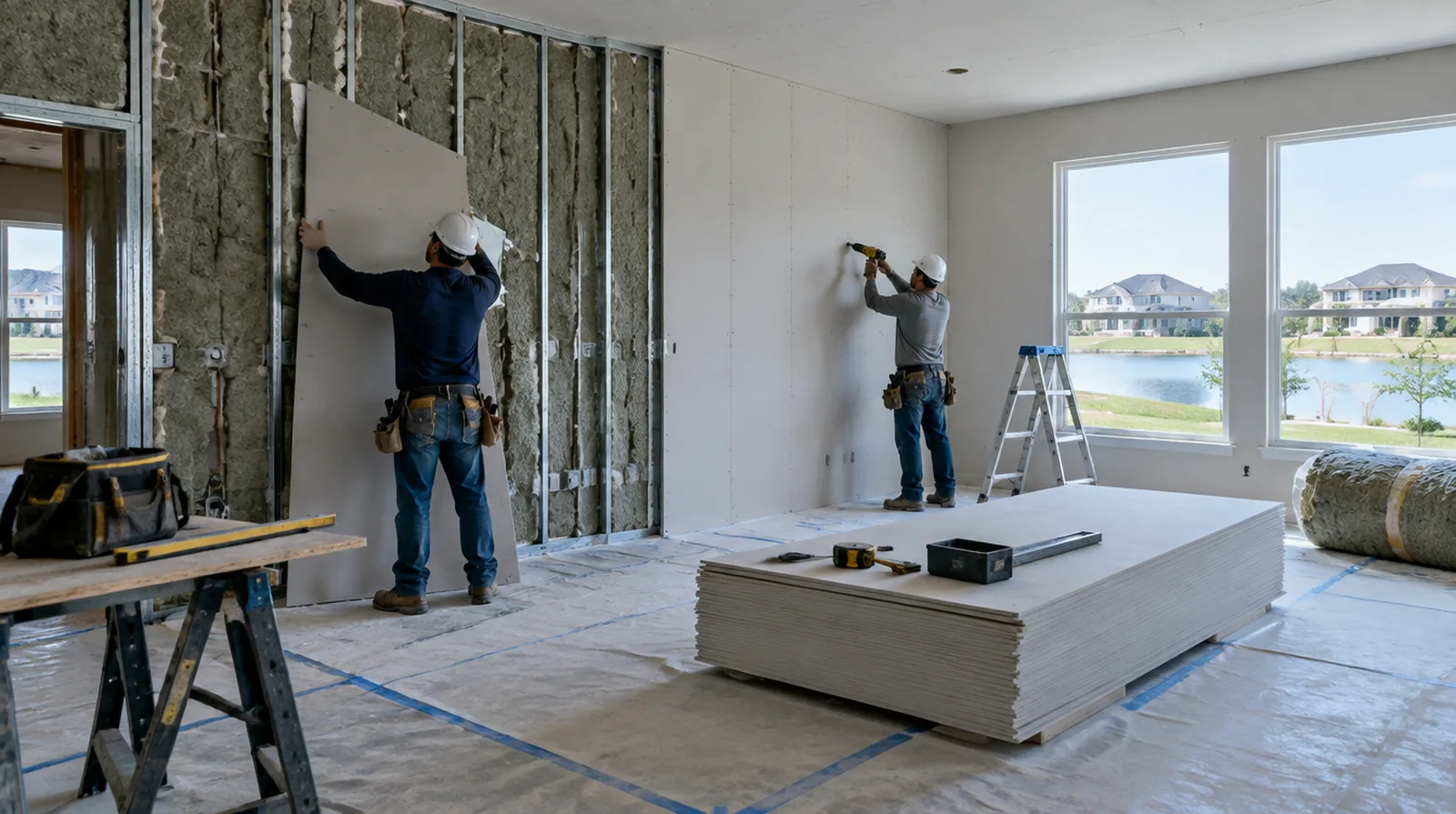
Evaluate added thickness
Adding layers changes the relationship between the wall face, fittings and adjoining trim. Include those interfaces in the scope so acoustic work does not leave unfinished perimeter details. For a distinctive existing pattern, retain a reference sample or detailed picture to make the matching discussion more specific.
Consider cavity access
An open partition offers differing options from a finished wall that must remain largely intact. Describe any removal and later restoration needed to reach the relevant cavity or attachment points. When more damage could be hidden, ask how any added scope will be documented before extra material is removed or replaced.
Finish the visible surface
Acoustic board still needs the suitable joint treatment and coating preparation. Complete that work without disturbing the details on which the sound control system depends. If the coating stability is unclear, assess which layers are adequately bonded and which should be removed rather than simply hidden beneath new material.
Address air leakage
Air gaps at wall edges and penetrations can weaken the benefit of other acoustic measures. Include compatible sealing wherever it is required by the chosen sound control assembly. Where a future fixture will be installed, coordinate any required backing while the cavity is accessible rather than reopening the completed wall.
Respect fire requirements
Acoustic changes should preserve any fire resistance required of the original separating assembly. Confirm compatible materials and details before adding layers or modifying the cavity. Before comparing two proposals, check that both include the same protection, finishing and cleanup boundaries rather than comparing totals alone.
Explain verification limits
An installation scope does not itself establish a measured acoustic rating for a finished room. If a particular rating is required, discuss suitable design input and testing with an acoustic professional. When the decorative coating has been selected, tell the finisher its intended sheen and color while the surface preparation standard is still being agreed.
Include flanking paths
Sound can travel around a treated wall through ceilings, floors and adjoining partitions. Review those flanking routes when explaining why a single wall treatment may provide only part of the solution. Where a future fixture will be installed, coordinate any required backing while the cavity is accessible instead of reopening the completed wall.
Set realistic goals
A heavier wall may not solve a complaint if sound still passes through openings and nearby junctions. Discuss the expected improvement without treating a single material as a complete solution. When the history of a repair is uncertain, note when it became visible and whether its appearance has altered across distinct seasons.
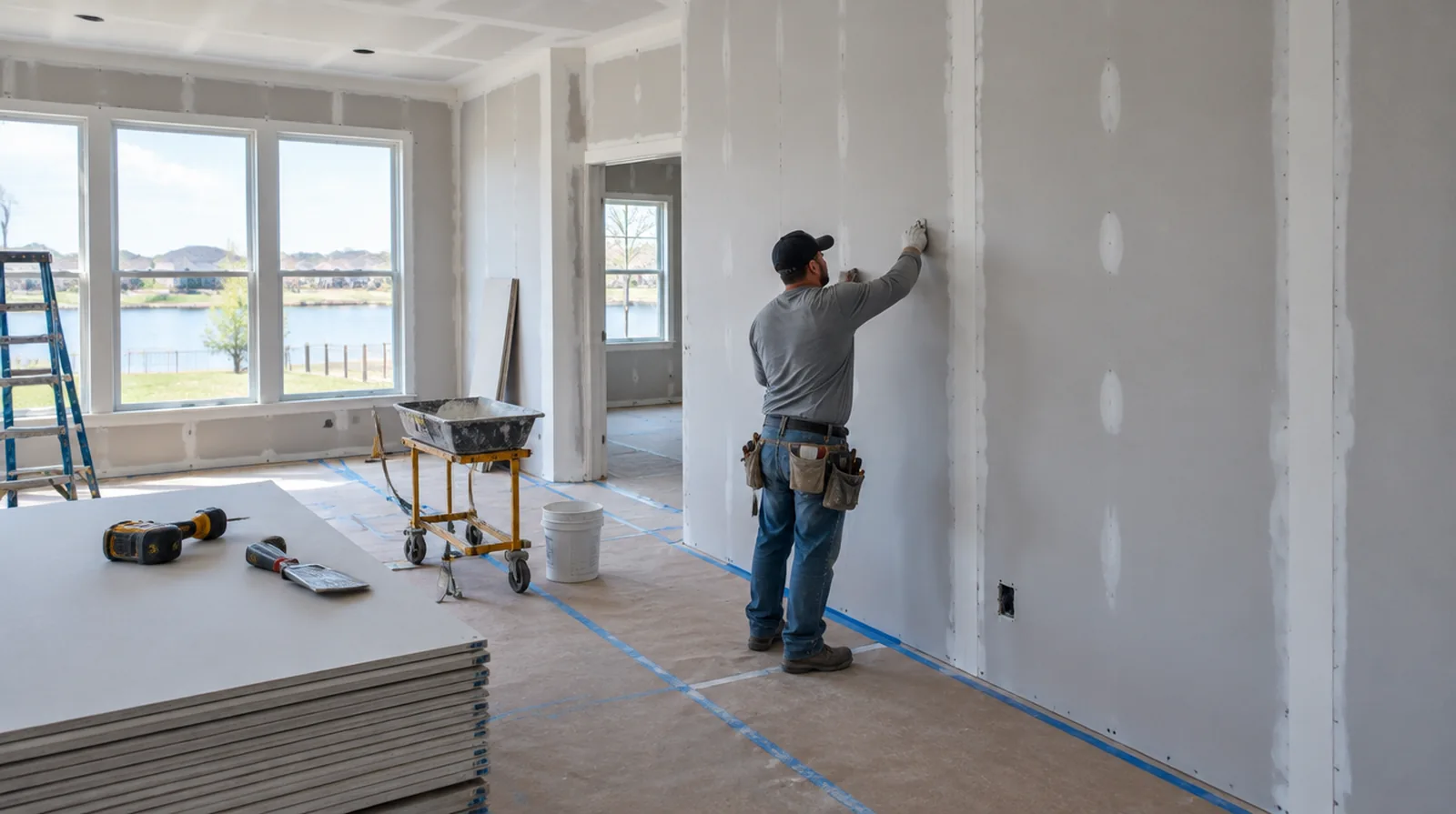
Review the whole assembly
Acoustic performance depends on framing, insulation, panel layers and perimeter details working together. Select a suitable tested or documented wall system rather than combining unrelated marketing specifications. If the problem developed after another renovation, explain which nearby materials or building systems changed before the damage became noticeable.
Coordinate electrical boxes
Opposing outlets and unsealed openings can create weak points in a separating wall. Electrical changes ought to be planned with the appropriate trade and within the required assembly details. If the interior will remain occupied, identify a workable separation between the work area and the space that still needs daily access.
Project context in Atascocita
Expansive clay under Atascocita homes moves slab foundations, which shows up as diagonal cracks over doors. HOAs in Atascocita often set rules for contractor parking, dumpsters and working hours.
Scope questions before finishing
For a project with several trades, agree which inspection or handover point must happen before the next person starts work.
If the decorative coating is already chosen, share its sheen and color early because those choices influence how surface preparation is judged.
If an independent painter completes decoration, agree the condition of the handed over surface and assign responsibility for small final corrections.
When a quote includes multiple visits, ask what happens during each stage and when the room needs to remain undisturbed between coats.
Before comparing two proposals, check that both include the same protection, finishing and cleanup boundaries rather than comparing totals alone.
When the history of a repair is uncertain, note when it became visible and whether its appearance has altered across differing seasons.
For a repair that crosses several surfaces, measure the affected planes separately so the estimate can explain where each finishing treatment starts and stops.
At a repair beside an opening, allow clearance for moving board through the doorway and space to use the finishing tools effectively.
When painting is outside the proposal, describe the remaining decorative preparation clearly so another contractor can price that stage accurately.
When damage followed other building work, describe the nearby alterations and the sequence between those changes and the first visible defect.
Where occupants have dust sensitivity concerns, agree containment and cleaning measures before settling the way the room will be staged.
If the wall surface work belongs to a broader renovation, coordinate its order with flooring, cabinetry and trim instead of scheduling finishing in isolation.
Explore the Atascocita drywall overview for related options, or read the project planning information before arranging the next stage.
More planning details for Atascocita
Knockdown texture is common in Atascocita homes and usually needs a test patch to match. Dating photos of a crack helps show whether movement is ongoing before a repair is scheduled. Upstairs game rooms in Atascocita run warm in summer, which can crack seams on sloped ceilings.