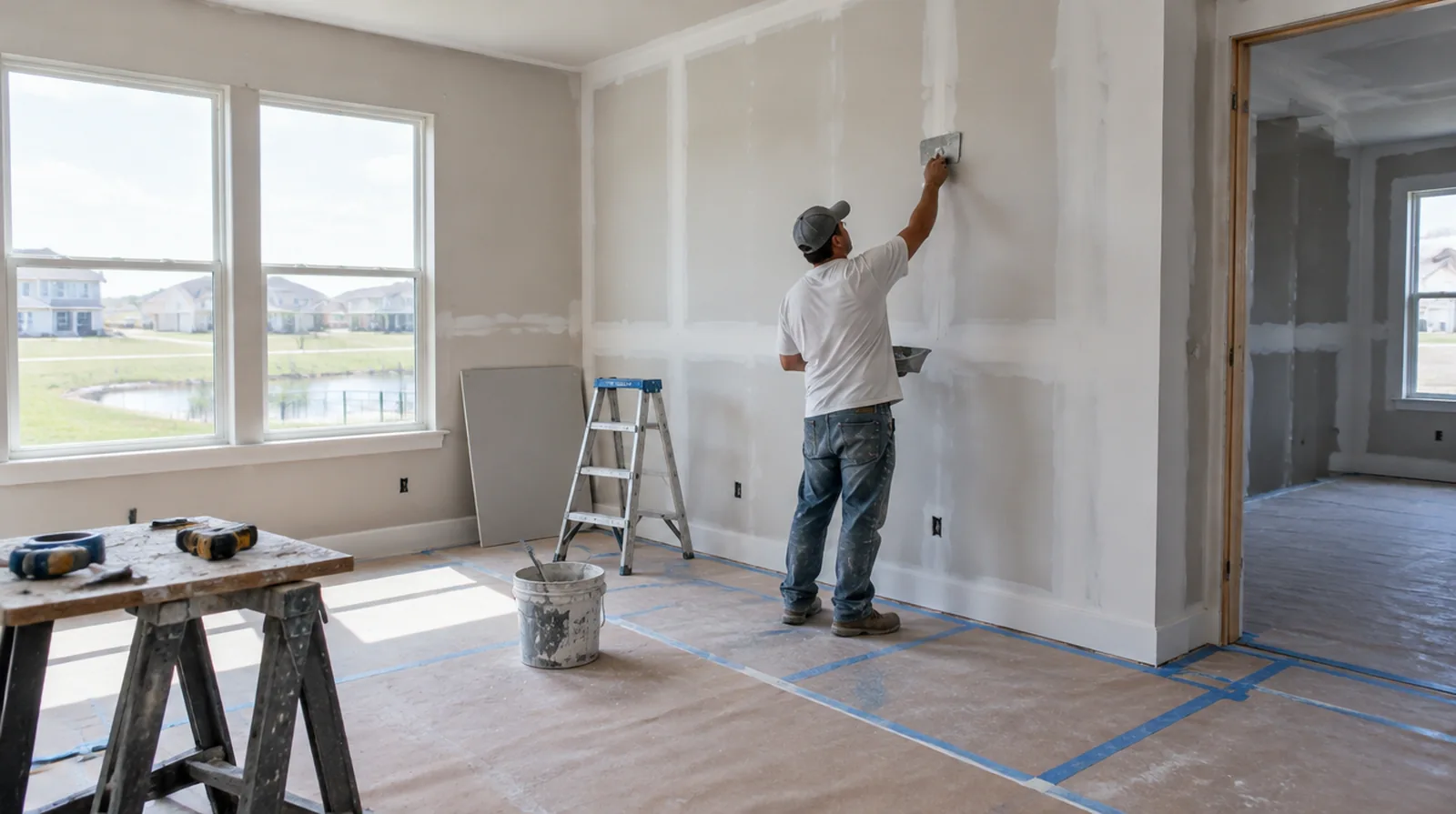
Build thin finishing coats
Several controlled applications are normally easier to flatten than one deep deposit of joint compound. Each layer needs sufficient drying time before the next pass can be judged accurately. If a household member is sensitive to dust, discuss containment and cleaning expectations before choosing how to stage the room work.
Reinforce panel seams
Joint tape bridges the transition between the original wall and a replacement section. Embed the chosen tape fully in its intended compound so the edges bond without bubbles. If there is a fixed move in date, reserve enough time for the coating stages after drywall work instead of counting only the installation period.
Identify the cause
A dent from moving furniture calls for a different repair than a joint that repeatedly opens beside a door. Describe any change in the defect and check whether the surrounding board is still stable. When the same defect has returned, share information about previous repair methods so the next assessment can consider why they did not last.
Protect adjacent surfaces
Fine gypsum dust can travel beyond the immediate patch unless floors and nearby furnishings are protected. The work plan should identify what needs moving and which room can remain in use. When the same defect has returned, share information about previous repair methods so the next assessment can consider why they did not last.
Feather beyond the opening
The visible finishing area typically extends farther than the hole because a gradual taper hides the repair edge. A broad blend reduces the ridge that otherwise appears when light travels across the wall. For a room with restricted airflow, plan drying conditions alongside dust protection and the comfort of people occupying neighboring spaces.
Prepare for primer
Fresh compound and existing painted drywall absorb coatings differently unless the repair receives suitable primer. Establish whether suitable primer is part of the repair or will be applied by another contractor. If the surface condition is uncertain, allow for an assessment that can distinguish stable material from layers that should not be covered.
Review with side lighting
Use an angled view as well as a direct view when reviewing a finished patch. Checking from more than one angle helps separate surface imperfections from differences in coating sheen. When a quote includes multiple visits, ask what happens during each stage and when the room needs to remain undisturbed between coats.
Choose the patch boundary
Loose paper and crumbling gypsum must be removed until the surrounding panel can support a durable repair. A tidy rectangular cut often provides stronger backing than following an irregular broken edge. Before comparing two proposals, check that both include the same protection, finishing and cleanup boundaries rather than comparing totals alone.
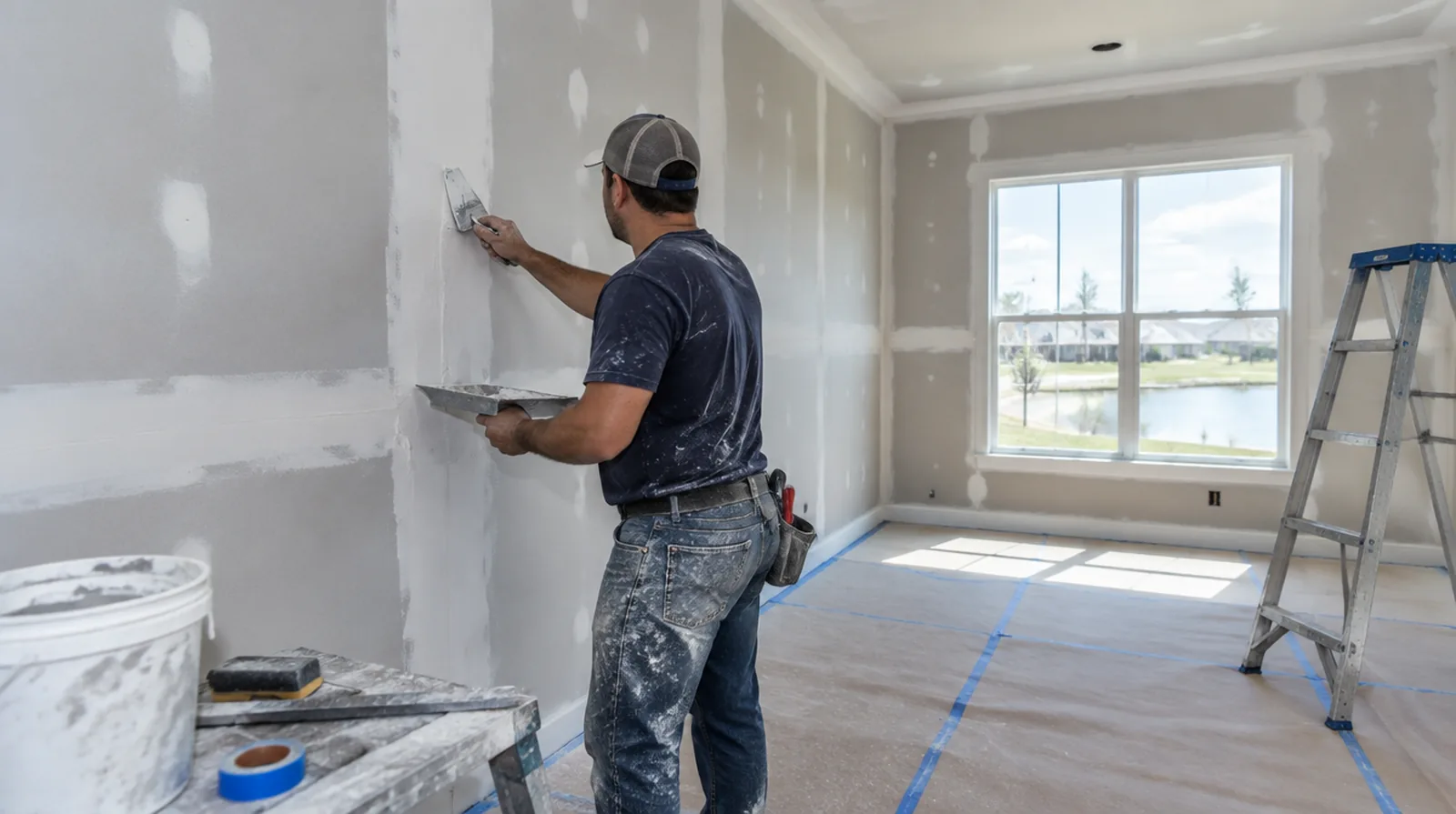
Set the paint boundary
Even a well blended patch can remain visible when touched up with an aged or unavailable paint color. Consider a corner to corner decorative boundary when color or sheen differences would otherwise remain noticeable. If the wall surface work belongs to a broader renovation, coordinate its order with flooring, cabinetry and trim instead of scheduling finishing in isolation.
Document recurring movement
A crack that repeatedly reappears could need the cause investigated before more cosmetic work. A drywall estimate should state when another trade needs to investigate before surface work proceeds. If the final paint is already chosen, share its sheen and color early because those choices influence how preparation of the surface is judged.
Project context in Atascocita
Moisture-resistant board and a gap above the slab help lower walls in rooms that have flooded. If a foundation repair is planned in Atascocita, cosmetic drywall work is best done after it is complete.
Scope questions before finishing
When the same defect has returned, share information about previous repair methods so the next assessment can consider why they did not last.
Where flooring is staying in place, agree on protective coverings and check that tools and material handling will not damage the visible finish.
For a distinctive existing pattern, retain a reference sample or detailed picture to make the matching discussion more specific.
If the room will remain occupied, identify a practical separation between the protected room and the space that still needs daily access.
If a household member is sensitive to dust, discuss containment and cleaning expectations before choosing how to stage the space work.
For a small repair with extensive setup, compare the total scope rather than assuming the price should follow the hole dimensions alone.
For a surface carrying numerous paint layers, discuss whether differences in the retained profile or sheen justify decorating a broader area.
When damage followed other building work, describe the nearby alterations and the sequence between those changes and the first noticeable defect.
If the completion date matters most, allow for intervals between coats as well as active labor rather than assuming the entire process happens continuously.
For a surface that will receive wall covering, share the product requirements early so the finishing stage supports the planned decorative treatment.
Where the quoted work stops before painting, request a well defined description of what remains so the next decorating stage can be priced realistically.
If the proposal requires return visits, identify the purpose of each stage and the intervals during which finishing material needs to remain undisturbed.
Explore the Atascocita drywall overview for related options, or read the project planning information before arranging the next stage.
More planning details for Atascocita
Gulf humidity slows drying, so air conditioning and fans help between finishing coats. Dating photos of a crack helps show whether movement is ongoing before a repair is scheduled. HOAs in Atascocita often set rules for contractor parking, dumpsters and working hours.